

With its 200 floors, 160 of which are habitable, the Burj Khalifa is a huge skyscraper visible from 95 kilometers away.
Behind this tower of impressive dimensions lies a true technical feat that has helped make Dubai a global symbol of luxury and excess.
The story of the Burj Khalifa
Rising 828 metres above the ground, the Burj Khalifa is the tallest freestanding structure in the world.
Conceived at the initiative of Sheikh Mohammed bin Rashid Al Maktoum – who wanted to make Dubai the world’s leading tourist destination (and reduce the emirate’s reliance on oil) – the project was developed by Emaar, one of Dubai’s real-estate heavyweights.
The construction of this mega-structure was entrusted to the Americans Adrian Smith (chief architect) and Bill Baker (chief structural engineer), two world-renowned experts.
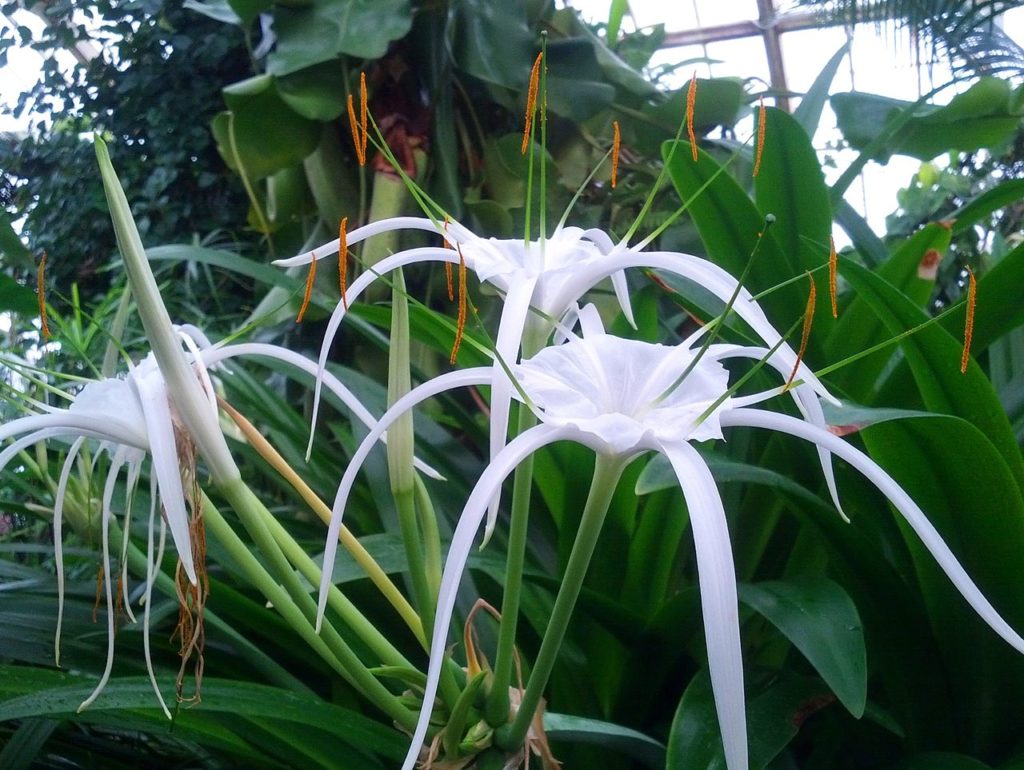
The tower’s design is directly inspired by the shape of the Hymenocallis – also known as the spider lily – a rare plant cultivated in Dubai and in India.
Project
Emaar announces the construction project.
Construction begins
Building work gets underway.
World’s tallest tower
Burj Dubai becomes the world’s tallest tower at 512 metres, surpassing Taipei 101 in Taiwan.
Completion of exterior work
The last glass panels have been installed, and the exterior of the tower is complete.
Inauguration
The tower is (partially) open to the public. A huge fireworks display closes the inauguration ceremony.
It should also be noted that Sheikh Mohammed revealed in 2016 that the idea of erecting such a building in Dubai dates back to the 1960s, when he and his father traveled to New York to visit the Empire State Building.
From 560 meters to 828 meters
Initially, the tower was called “Burj Dubai.” But on inauguration day – 4 January 2010 – it was renamed “Burj Khalifa” in honor of Sheikh Khalifa Ben Zayed Al Nahyane, current president of the United Arab Emirates and main financial backer of the project (he contributed a total of $10 billion).
The skyscraper was initially supposed to reach a height of 560 meters upon completion, making it the tallest building in the Middle East. However, faced with other competing projects, the developer’s ambition was revised upward to 828 meters. Its final height remained confidential until 2007.
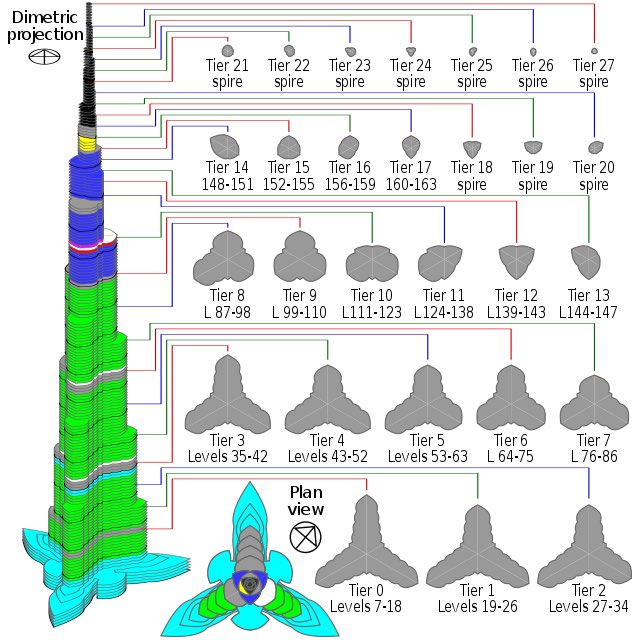
Please note that many levels are not habitable, but serve only to maintain the structural balance. They are shown in gray in the projection below.
Apartments, offices, hotels…
Built in record time, the Burj Khalifa is the result of an astronomical investment of $1.5 billion. By comparison, One World Trade Center in the United States cost $3.9 billion.
Covering a total area of 309,473 square meters, it houses 1,044 luxury apartments, four swimming pools, a gourmet restaurant, and the sumptuous Armani Hotel, which occupies the top 15 floors of the tower.
The top floors have been allocated to corporate offices.
It is possible to visit the Burj Khalifa. Two observation decks offering panoramic views of Dubai have been set up. The first is located on the 124th floor (442 meters above sea level) and the second on the 148th floor (555 meters).
Behind the scenes of the construction of Burj Khalifa
The foundations
To lay the foundations for the skyscraper, builders used 45,000 cubic meters of concrete, weighing 110,000 tons.
To support the weight of the skyscraper and compensate for the instability of the ground, huge holes were drilled into the sand. These holes were used to accommodate 192 high-performance concrete piles, driven to a depth of approximately 50 meters. Each of these piles is 43 meters long and 1.5 meters in diameter.
Above, a 4-meter-thick concrete slab has been poured.
The challenge of corrosion
In order to limit corrosion caused by contact with chemicals in the soil water, a cathodic protection system was deployed during the construction of the structure.
In practical terms, an electric current is applied between the material to be protected and an auxiliary anode (also known as a current dissipator). Its power is adjusted to delay corrosion of the metal in question.
This therefore protects the tower from collapsing.
This system is often used to protect other metal structures in contact with an aqueous environment, such as water pipes, metal pillars for gas pipelines, etc.
The construction of the floors
On average, one floor was built every three days.
This achievement was made possible by the use of a hydraulic crane called a “kangaroo crane.”
Thermal insulation and wind resistance
The construction of the Burj Khalifa’s facades required the use of 1,830 tons of aluminum and 142,000 m² of SunGuard architectural glass, a material produced by the Luxembourg-based company Guardian Luxguard.
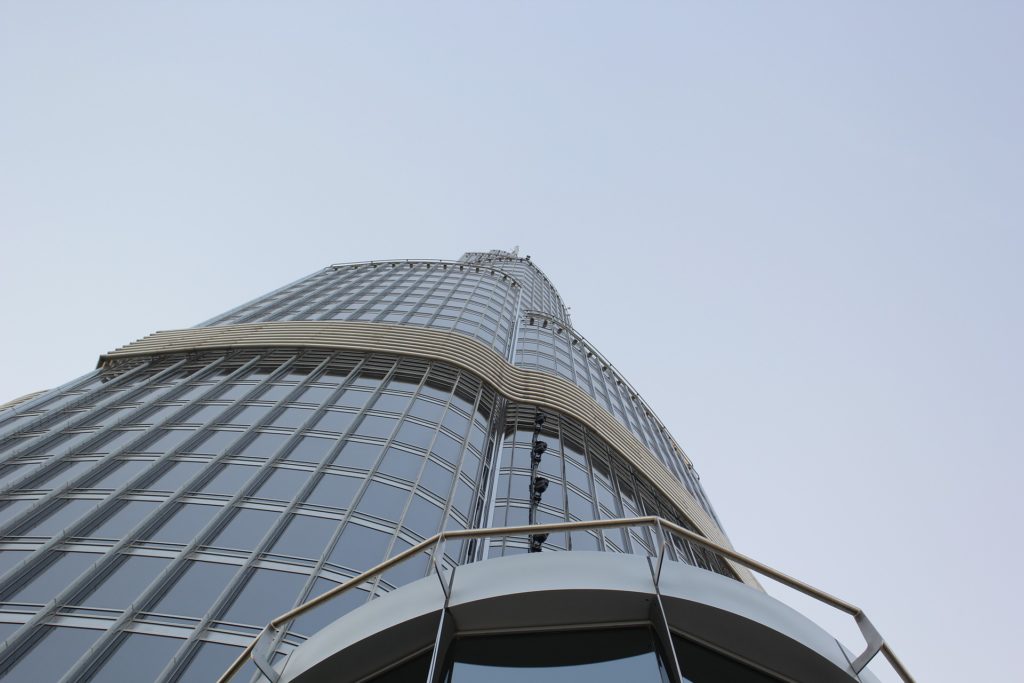
This is reflective glazing, capable of compensating for the enormous amount of light that the building receives, located, remember, in a desert region where temperatures can easily reach 50°C.
Thanks to its special coating (a combination of silver and titanium), only 15% of solar energy penetrates the building. Without it, the temperature inside the tower could reach 98°C!
The 28,000 glass panels are also resistant to winds of up to 250 km/h.
For the record, cleaning all 26,000 windows takes 3 to 4 months of work and requires 36 workers.
Elevator systems
Inside the tower, 8 escalators have been installed, as well as 57 elevators.
Some of these are double-decked, serving two floors simultaneously.
The fastest of these elevators can reach a speed of 110 meters per second, which is equivalent to 36 km/h.
Work on the construction site
In total, 12,000 workers of 30 different nationalities were mobilized between 2004 and 2010 to build the Burj Khalifa. It took them nearly 22 million hours of work to complete this titanic project.
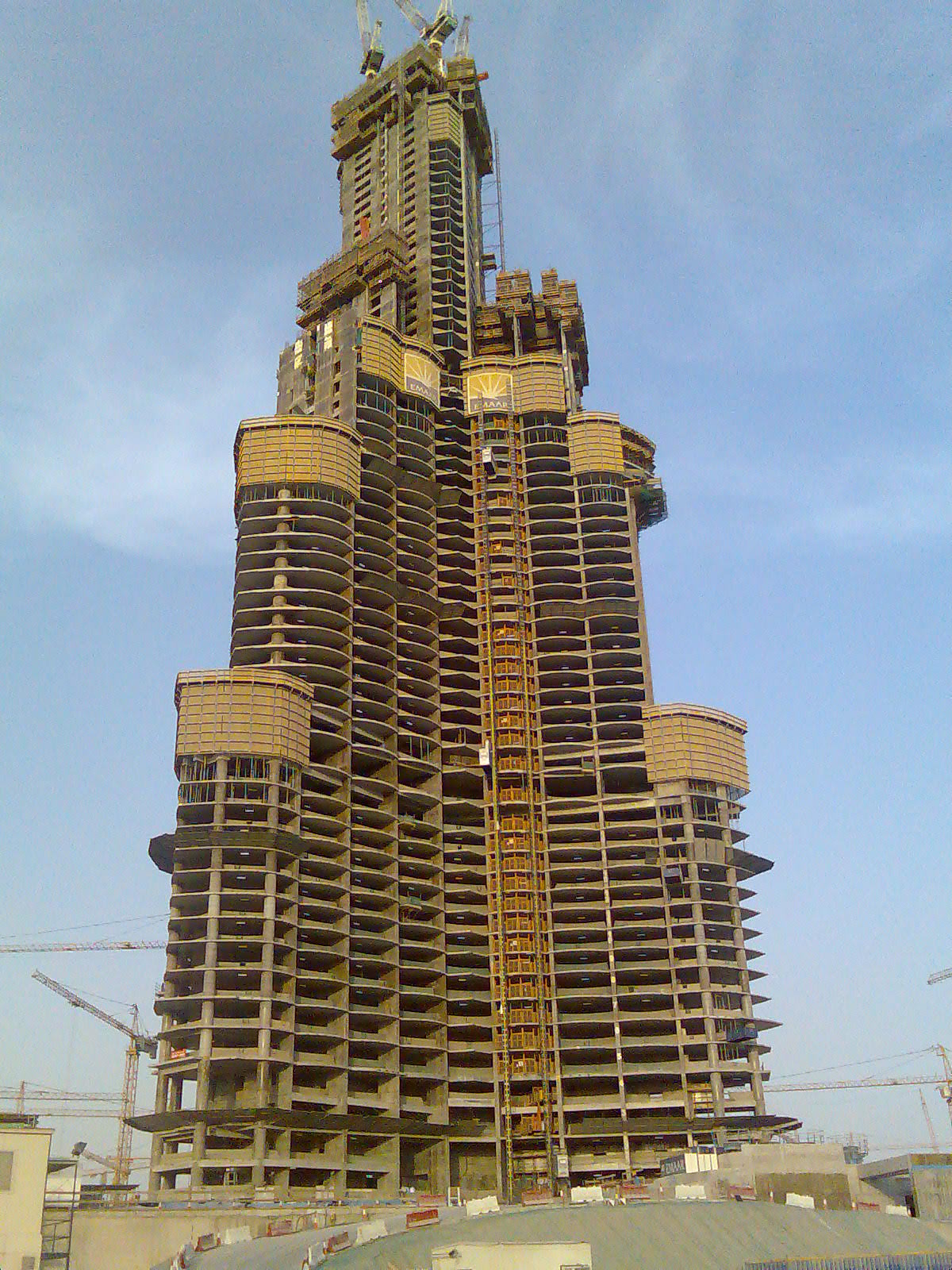
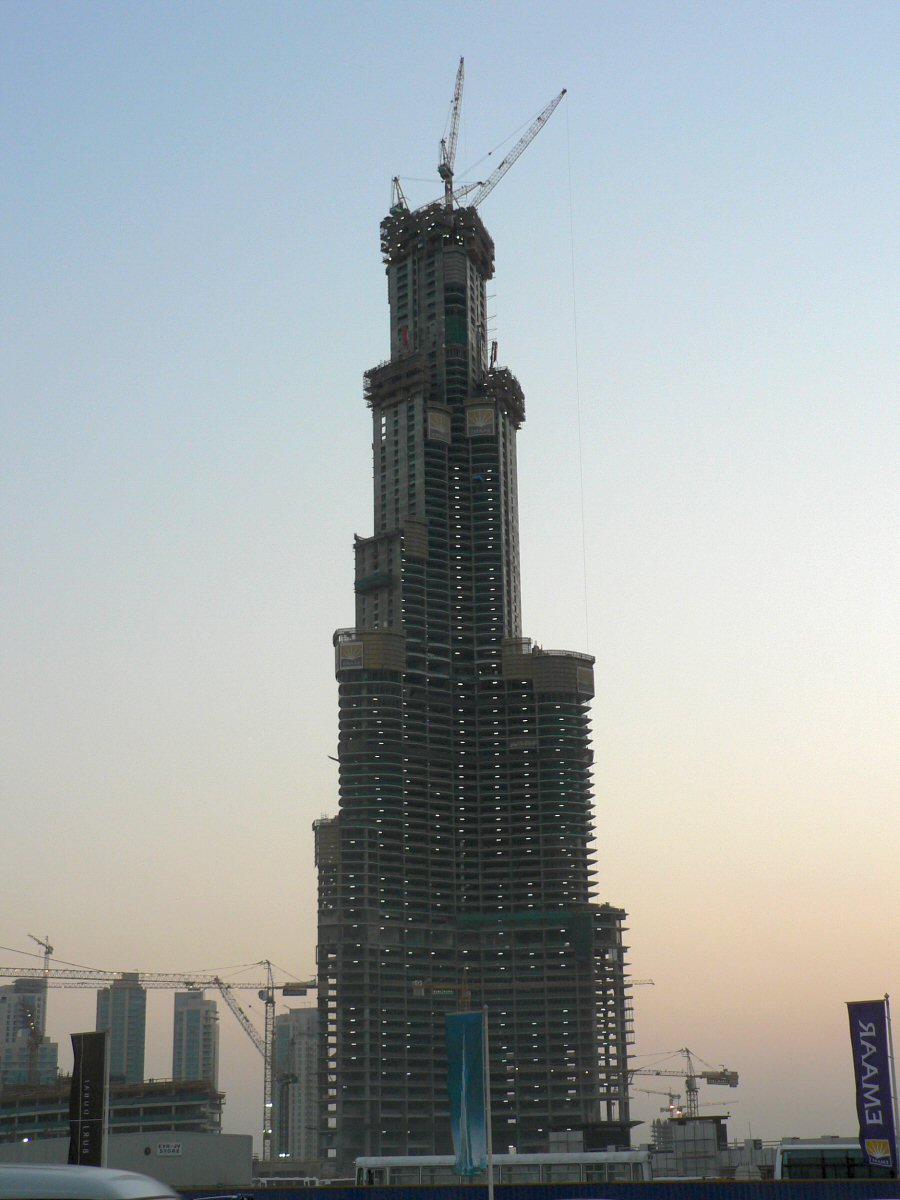
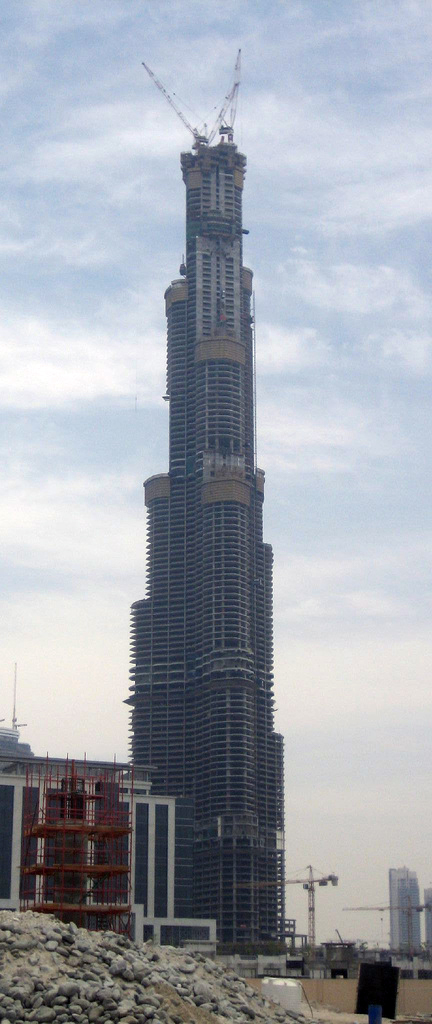
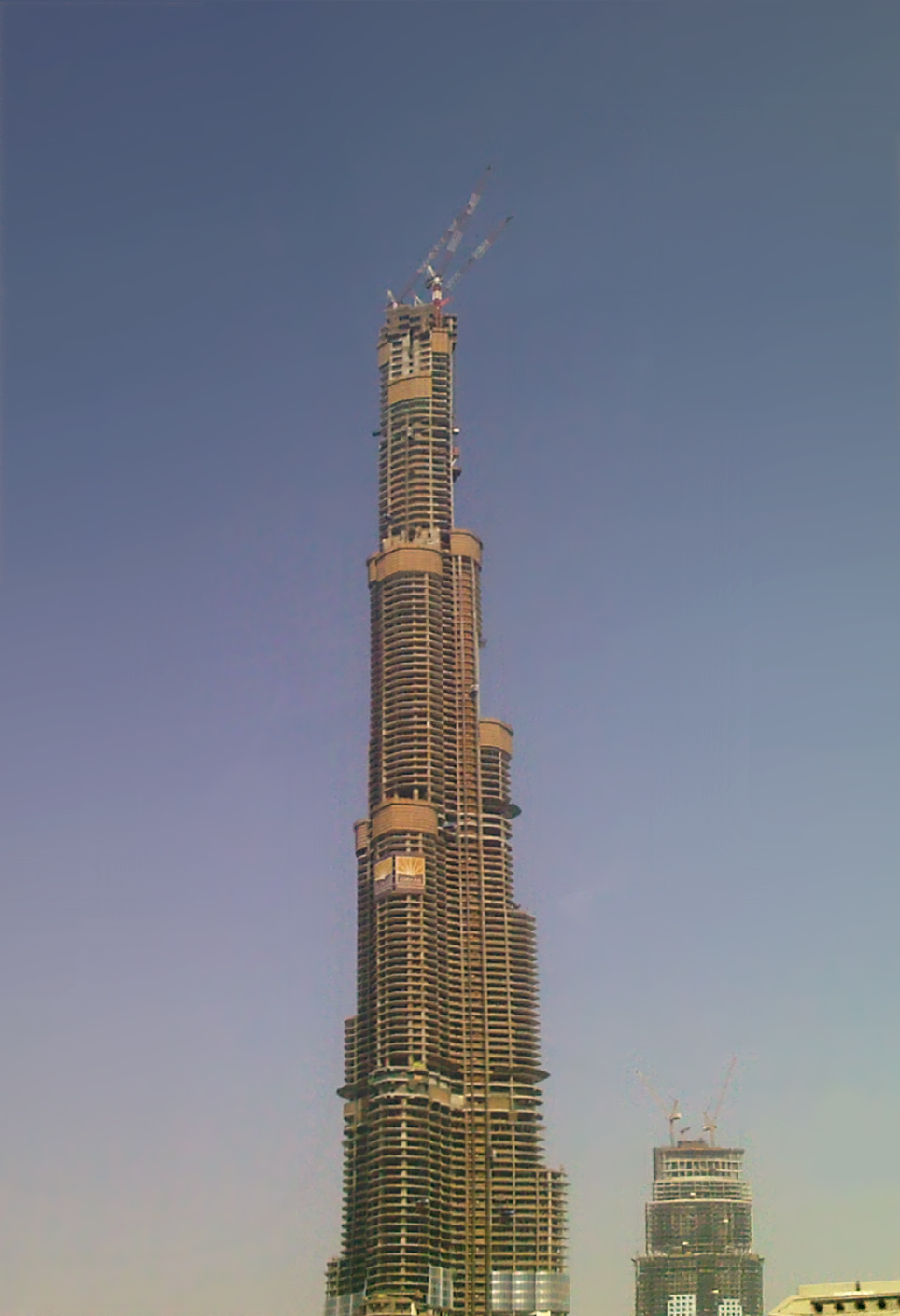
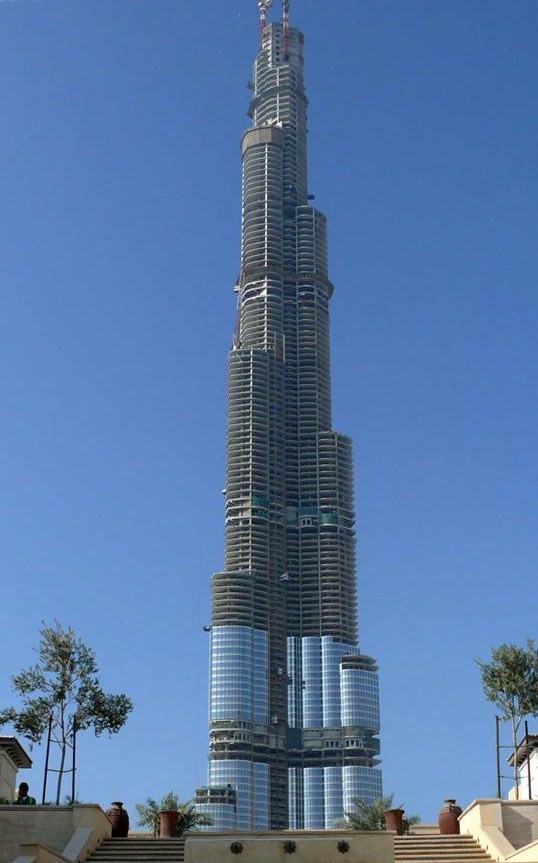
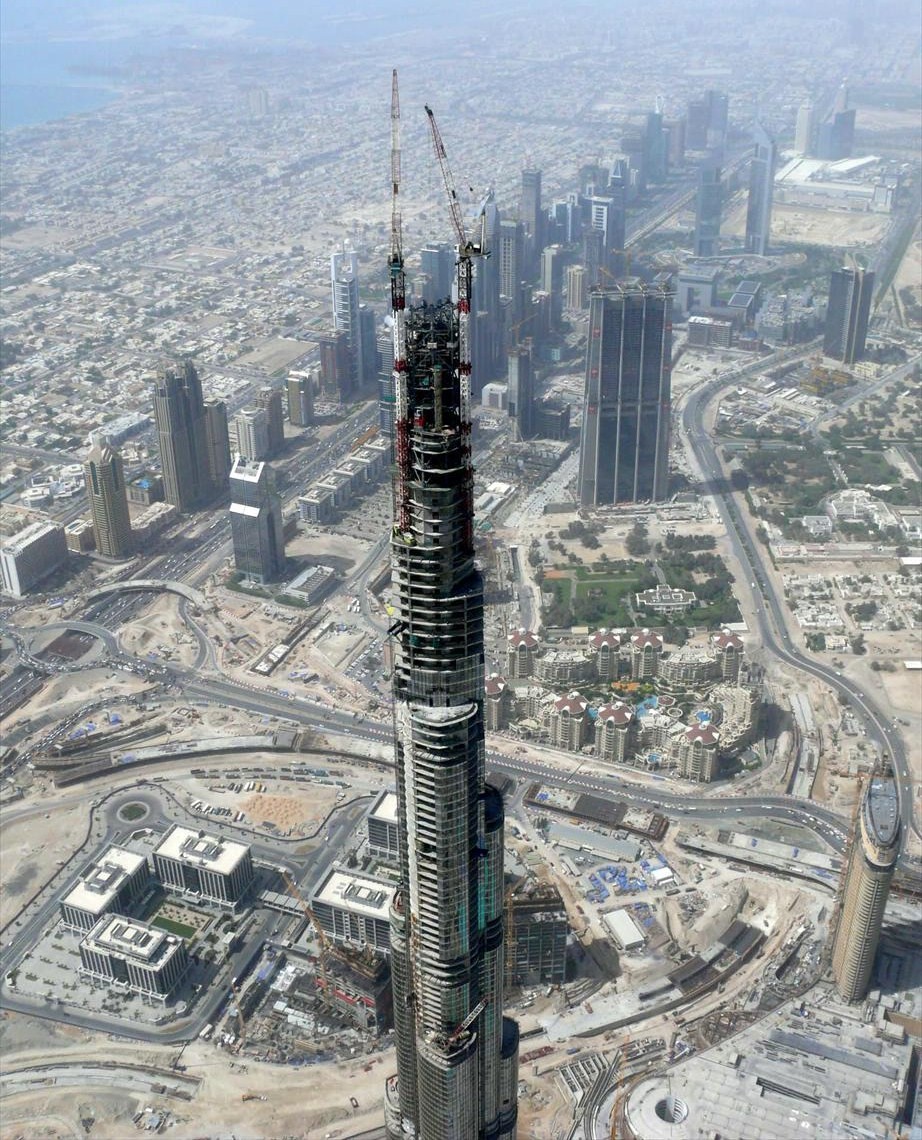
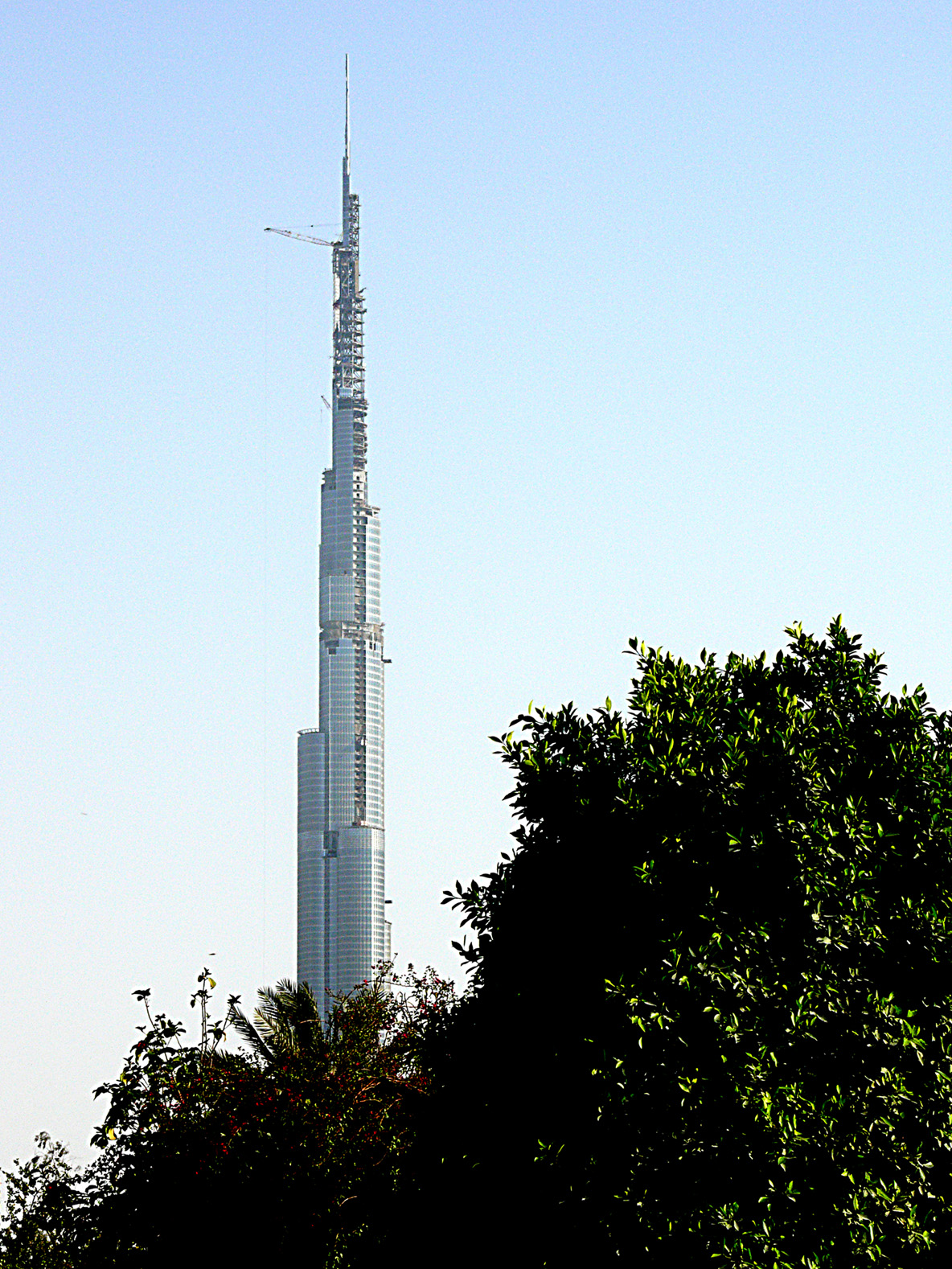

The workers came mainly from Southeast Asia. Their working conditions have been criticized on several occasions, particularly by human rights organizations.

Workers were paid an average of $4 per day, or €2.85. Carpenters were paid $7.60 per day, or €5.50. Given these conditions, some workers expressed their discontent on March 21, 2006, during a strike.
Several acts of vandalism targeting cars, offices, and construction equipment were observed during the day. According to official authorities, the damage was estimated at nearly $1 million, or approximately €700,000.
Construction companies
As mentioned above, Emaar Properties was the developer of the project.
The company worked in partnership with the American architectural firm Skidmore, Owings and Merrill (SOM) and with a consortium comprising the Belgian group Besix, the multinational Arabtec, and the Korean company Samsung C&T Engineering & Construction.
For Samsung C&T Engineering & Construction it was not its first attempt, as the company had previously participated in the construction of Taipei 101 in Taiwan (2001) and the Petronas Twin Towers in Kuala Lumpur, Malaysia (1998).
Turner Construction Company, an American company, was entrusted with the management of the project.
Emaar also partnered with Hyder Consulting, which specializes in architecture and engineering. Hyder Consulting was responsible for calculating the facades and structures, as well as designing the electrical, hydraulic, mechanical, and security systems. Hyder Consulting also carried out the geotechnical study for the foundations.
Finally, the American company Otis Elevator Company was responsible for designing the elevator and escalator systems.
Oscillation at the top: does the Burj Khalifa tower move?
With such a gigantic construction, designers had to overcome several challenges. Chief among these was wind resistance, as the region is regularly hit by storms, especially in summer.
The goal was to create an effective oscillation that would cause minimal disruption to the occupants of the Burj Khalifa and would not affect the aesthetic and architectural aspects of the project.
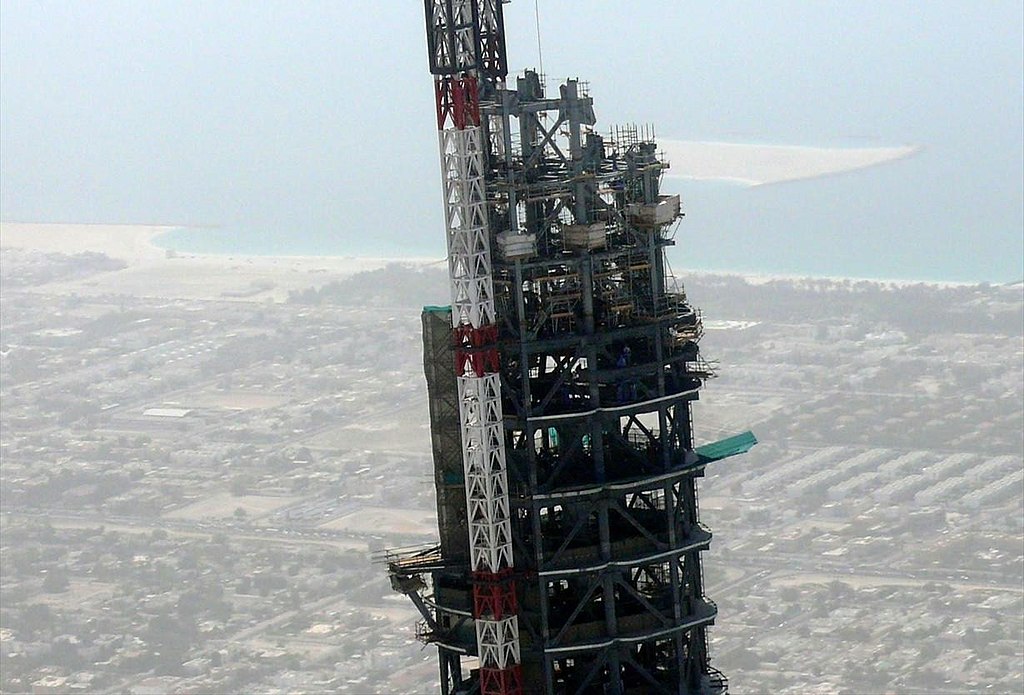
Around forty wind tunnel tests were therefore carried out. These tests determined the shape of the Y-shaped base, with three main structures interlocking around a solid central column.
A total of 26 intermediate levels, decreasing in size, gradually spiral upward toward the sky. This irregular shape has the advantage of disrupting the wind, preventing it from amplifying and forming whirlwinds.
However, this does not prevent the Burj Khalifa from moving: it oscillates by about two meters at the top.